Tuesday, March 3, 2015

The great betrayal on OROP front

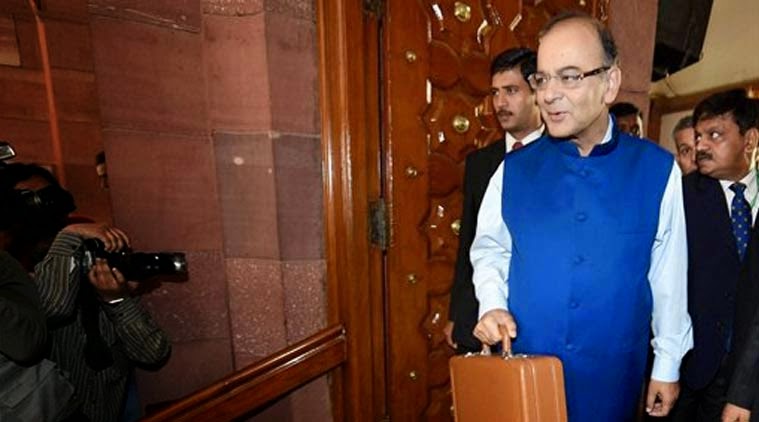
During his interview after the Budget speech, the Union finance minister, when asked about the fate of “one rank, one pension” (OROP) for the defence personnel, remarked that modalities were being worked out between the defence services and the Ministry of Defence (MoD). He went on to say that he had given an additional 12.5% to the defence budget, giving the impression that he had done great personnel favour to the defence services. He does not appear to know how far removed are the Indian defence forces from the state-of-the-art weapon systems and how long has it been crying for modernisation.
Surely he would know that this additional amount for the defence budget, as such, has no link with OROP, because pensions for the defence personnel do not flow out of the defence budget. This additional allocation barely covers inflation in the cost of defence equipment. In the remaining Budget, there is no allocation of funds for OROP.
Soldiers at disadvantage


The demand for OROP has been pending for well over two decades. The rationale for this demand has been articulated umpteen times. More than 80% of the soldiers retire between the age of 34 and 36, and the remaining 20% at varying ages, with only 0.2% retiring at 60, when all the central services employees retire. Early retirement and extremely limited avenues for career advancement (promotions) place the defence personnel at great disadvantage vis-à-vis their counterparts in the civil services.
This early retirement places defence personnel at great financial disadvantage and takes its toll on them in way of shortening their lives: of both officers and soldiers, notwithstanding the fact that on retirement, they are physically much fitter in every respect compared with their civilian counterparts. The average life expectancy of the officers is 72.5, of the JCOs is 67, and of the soldiers is 64. These are figures from the Institute of Applied Research and Manpower (IARM). The life expectancy figure for civil servants is 77 years. The Railways, in their study, arrived at a figure of 78.
This issue of the shortening life of soldiers was raised in Parliament and the-then defence minister (the present President and supreme commander of the Indian forces) had stated that it would be examined in detail. Those were his famous words!
Babus flummox defence minister


The demand for OROP became all the more strident when the civilian counterparts granted to themselves what is called non-functional upgrade (NFU). Simply stated, it implies that that their pay and allowances will have no relation to their job content but only to the length of the service; and that their advancement in career will have no bearing on the availability of higher posts and performance.
Political parties have repeatedly been promising the grant of OROP. Narendra Modi, as prime ministerial candidate of the Bharatiya Janata Party (BJP), during his election rally at Rewari had promised that on coming to power, his party would announce OROP. Later, speaking to the troops in Siachen as Prime Minister, he said he had granted them this benefit.
More recently, the defence minister has been giving all manner of assurances to veterans, assurances which include specific dates when the case would be finalised and forwarded to the Finance Ministry: well before the Budget date.
Now it appears that the MoD has not been able to resolve the modalities for working out the details. Obliviously, the babus in the MoD have flummoxed the defence minister successfully and made him cut a sorry figure before the nation’s veterans.
Today’s soldiers tomorrow’s veterans


Neither the PM and nor the DM appears to realise that there exists a very strong bond between the veterans and the serving troops. Today’s soldiers are tomorrow’s veterans, and this betrayal on part of the government cannot go unnoticed by them, and will impact their morale surely.
The government’s general lack of sensitivity to the disadvantages of military service and the consequent disinterest of suitable youth in joining the defence services has led to both fall in standards on one part and a huge shortage in the officer cadre. The nations that do not send the better lot to the defence services will one day suffer the consequences.
Finally, a quote from Phillip Mason, ICS, would be appropriate in the present setting. While commenting on India’s dismal war record, he notes in his book, “A Matter of Honour”, that: “Indian disadvantage lay in the nature of organisations of armies and, in the end, in politics and the kind of governments that had grown up in India.” One may venture to ask, if the state of affairs are any different today?
Lt Gen Harwant Singh (retd), Hindustan Times, Chandigarh
(The writer is a former deputy chief of the army staff and an expert on defence matters. The views expressed are personal)
Courtesy: Hindustan Times

Saturday, February 28, 2015

One Rank, One Pension stuck between Services and Defence Ministry

Reinstating government’s commitment on implementing the ‘One Rank, One Pension’ policy, Finance Minister Arun Jaitley on Saturday said the issue is pending as the method of calculating pension is stuck between the Armed Services and the Defence Ministry.

“I have already in the last Budget said that we are going to implement ‘One Rank, One Pension’. This need not be stated on every occasion. We are completely committed to it,” Jaitley told reporters here when asked about the delay in launching the scheme.


 Explaining the reasons behind the delay, the Minister said: “The methodology of calculating the One Rank, One Pension is an issue pending between the Services and the Defence Ministry.”

As and when that idea is formulated, not only it should be implemented, it will be implemented, he added.

“You may only notice that I have today, despite the squeeze, increased the allocation for Defence by almost Rs 25,000 crore,” Jaitley said.
Last month, Defence Minister Manohar Parrikar had said that ‘One rank, One pension’ scheme will be rolled out soon.

The scheme, which seeks to ensure that a uniform pension is paid to defence personnel who retire at the same rank with the same length of service, irrespective of their date of retirement, has been a long-standing demand of the over two million ex-servicemen in the country.

Courtesy: The Indian Express

Thursday, February 26, 2015

SC upholds AFT's decision to grant disability pension to ailing airman


In a huge relief to defence personnel, the Supreme Court has held that a member of the armed forces is presumed to be in sound physical and mental condition at the time of his entry into service, if there is no note or record to the contrary made at the time of one's entry.

The apex court has also clarified that in the event of his subsequent discharge from service on medical grounds, any deterioration in his health is presumed to be due to military service. A division bench comprising Justices Sudhansu Jyoti Mukhopadhaya and N V Ramana passed these orders on Tuesday while upholding a decision passed by the Chandigarh bench of Armed Forces Tribunal in the case of an airman Angad Singh Titaria.

SC bench also clarified that the provision of disability pension is a beneficial provision, which ought to be interpreted liberally so as to help those who have been sent home with disability at times even before they completed their tenure in the armed forces. "A soldier cannot be asked to prove that the disease was contracted by him on account of military service or was aggravated by the same. The burden to establish such a disconnect would lie heavily upon the employer for otherwise the rules raise a presumption that the deterioration in the health of the member of the service is on account of military service or aggravated by it," held the bench while referring to several earlier rulings of the apex court.

Angad Titaria had joined the Indian Air Force on November 13, 1971 in the clerical trade after he was found medically and physically fit as per prescribed standards. In 1987, he was diagnosed for coronary artery disease, namely infero-lateral myocardial infarction, and in 2006 he was diagnosed for diabetes mellitus.

In April 2008, he was released from the Air Force on recommendation of the medical board and was denied disability pension. The board was of the opinion that he had always remained posted at peace stations, and in that situation his disabilities were constitutional in nature and not attributable to or aggravated by service in the Air Force.

Angad moved the AFT, Chandigarh, against the Air Force seeking disability pension. On December 3, 2010, a division bench of AFT comprising Justice Ghanshyam Prasad and Lt Gen H S Panag had ordered the Air Force authorities to pay him disability pension but the Union government had approached the apex court against the decision.

Courtesy: Times of India

Friday, February 20, 2015

OROP has moved a step closer to its approval - IESM : A letter from Gp Capt VK Gandhi, VSM, Gen Secy, IESM

Dear Members

Further to the information given in the report of rally held on 1st  February 2015, on 1st  February 2015 a delegation of 30 ESM including four veernaris met RM at Kotah House. RM had promised to take action on OROP latest by 17th  February 2015.

IESM has a good news for you. Your dream of OROP has moved a step closer to its approval.

As promised by RM to IESM delegation that he will personally monitor the progress on OROP. True to his promise he has chaired a meeting today of OROP action committee. The meeting was attended by CGDA, DESW, MOD and Army Pay Cell, Maj Gen Aggarwal and Col Pruthi. Col Rathore also attended the meeting. It is confirmed that OROP file has finally reached MOD.

Following decisions have been taken in the meeting today 17th  February 2015. OROP will be as per approved definition.

In most of cases ESM will get fixed at highest of their rank pay band. OROP equalization will be done annually.

Some issues of Major’s pension are under discussion and will be sorted out soon.

RM gave special instructions to Gen Aggarwal to inform Gen Satbir singh about this development. Gen Aggarwal informed IESM asap he came out of the meeting. File is under final scrutiny and preparation and file will be dispatched to MoF on 23rd  February 2015 as RM is going to attend Annual Aero Show at Bengaluru from 17th  to 22nd  February 2015.

CGDA has already issued circular no 536 giving increase in pension of widows wef 24th  September 2012. This circular fixes the pension of widows at 60% of the pension of the ESM as given in circular 500. Widows will get this enhanced pension from 24 Sep 2012. They will further get arrears from 1 Jan 2006 as and when the MOD issues such instructions.

Dear Members hold your celebration till budget. We will finally come to know how much funds get allotted for OROP in this years budget and will raise a toast for OROP on that day.
IESM salutes sincerity of RM Sh Manohar Parrikar. He is a man of his words. He had promised action on OROP by 17th  February and he has executed it.

Regards,
Gp Capt VK Gandhi VSM
Gen Sec IESM
Block N5, Flat no 801
Narmada Block
Pocket D6, Vasant Kunj
New Delhi. 110 070

Mobile:  09810541222

Thursday, February 19, 2015

‘One rank, one pension’ a reality soon?

NEW DELHI: The much-awaited "one rank, one pension (OROP)'' for the armed forces is likely to be part of the Union budget, and could be implemented soon thereafter with the government defining "military pension'' as a category separate from other kinds of pension. 

An estimated Rs 8,000 crore is likely to be allocated by the government to fulfil its commitment to the over 25 lakh ex-servicemen, who have been stridently demanding OROP for several years without much success despite all political parties promising its implementation. 

Successive governments in the past have contended that granting of full OROP was neither financially nor administratively possible since it could lead to a cascading effect with similar demands being made by paramilitary personnel, among other things.
But sources said the government this time has decided that the military personnel, who retire at a much earlier age and undergo life-threatening postings, cannot be equated with other government employees. Both the finance and defence ministers, Arun Jaitely and Manohar Parrikar, have approved the step. OROP basically implies payment of uniform pension to personnel retiring in the same rank with the same length of service, irrespective of their date of retirement. 

"Military pension as a category has been defined as separate from others based on a series of criteria. This takes into account the hardship factor like being posted in far-flung areas, risky life-threatening duties and long hours of hardship," a source said. 

The arguments that will differentiate pensions earned by the armed forces from that of others, including paramilitary forces, is that they are the last line of defence and their pay and pension must be motivational and inspirational.

The government has also taken into account the fact that soldiers, airmen and sailors retire much earlier than their civilian counterparts and receive "aborted pension'' rather than "matured pension'' as compared to those serving in the BSF or CRPF. 

"A majority of soldiers retire at an average of 34 years and receive only aborted pension as compared to those serving in paramilitary. It is also a job which has considerable hardship whether it is the life expectancy or the 24-hour nature of the work,'' the source said. 

The previous UPA government had decided to implement OROP and provided a corpus of Rs 500 crore. After coming to power, NDA increased the amount to Rs 1,000 crore.

Courtesy: Times of India